Built in public. Follow the build → Try the live intake →

Most tree service software has never looked at a tree.

It will schedule whatever you tell it and print whatever number you type. Useful. But it can't tell a codominant stem from a healthy fork, and it has no opinion about the oak leaning over your customer's garage.

TreePro is the other half. It runs your website and your front office, it reads the photo the homeowner sends, and it knows what it's looking at.
Get early access Try the intake yourself In early access. A short list of crews, not a launch.
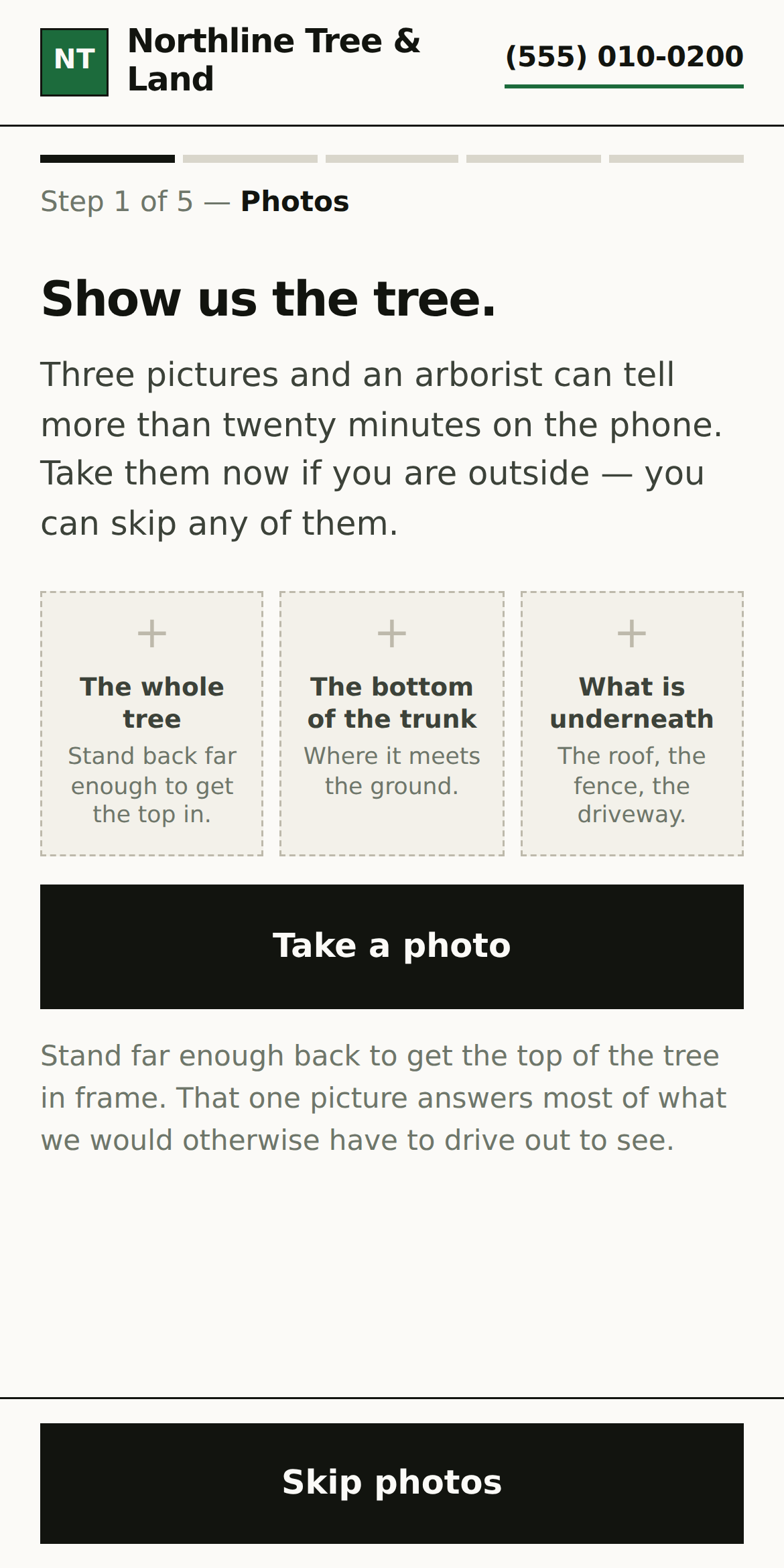
The first screen of the guided intake: show us the tree, with three photographs to take.
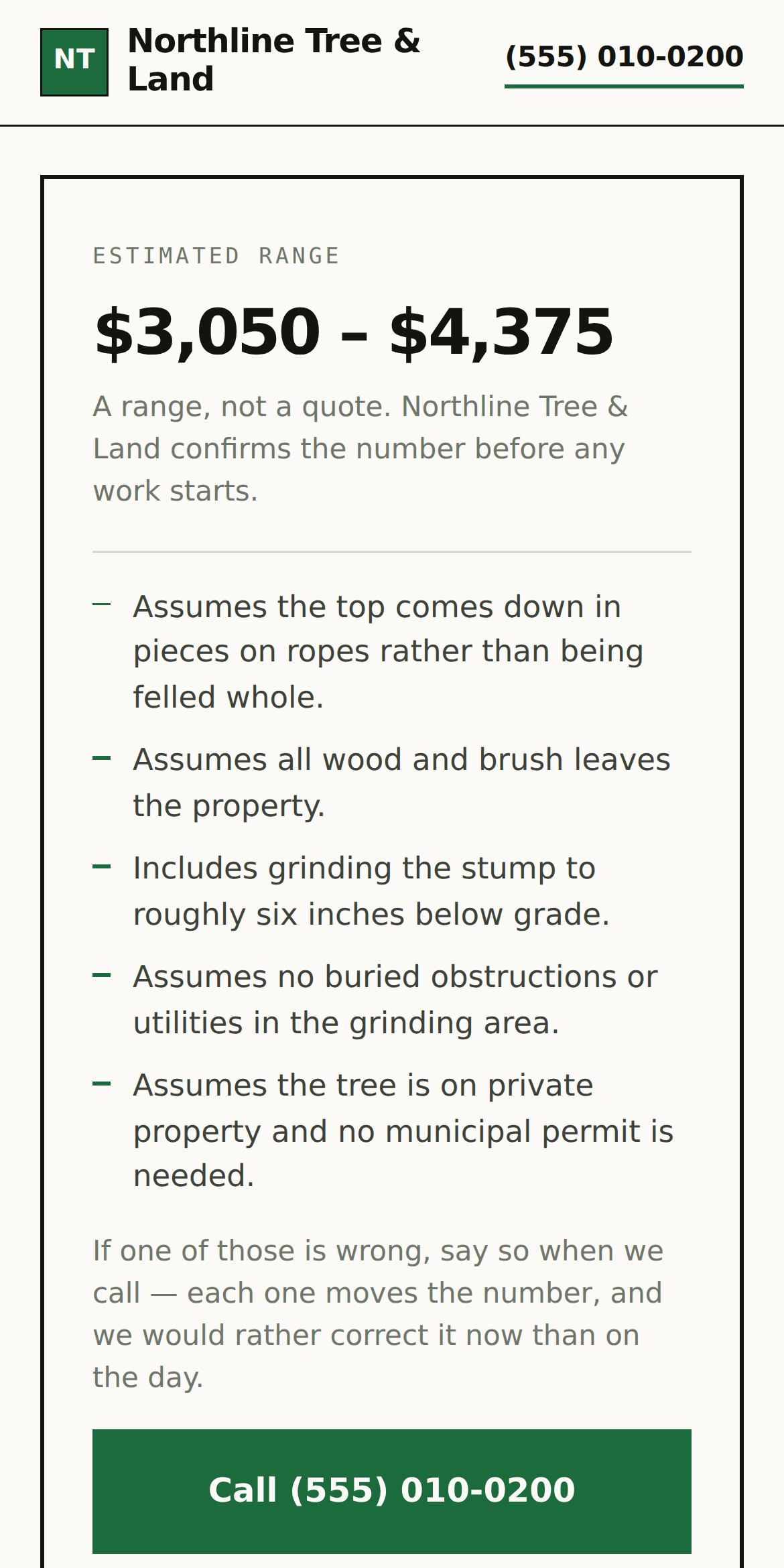
The answer screen: an estimated range with the assumptions it rests on written out underneath.
Not a mockup — running now at app.treepro.io
The part that costs you money

The job is won or lost before anyone starts a saw.

A homeowner watches a limb come down on the fence. She's got her phone out within the hour. She calls three companies off Google. Two don't pick up.

The one who answers gets the job, and it usually isn't the best climber in town. It's whoever was near a phone.

Everything after that point already has software. Scheduling, dispatch, invoicing, job costing. That's solved. What isn't solved is the hour where the work actually gets decided.

Where it goes wrongWhat it costs
Nobody answers at 8:47 PMThe whole job, to whoever did
An hour of windshield time for a tire-kickerHalf a billable morning
The estimate sits in your truck for four daysA job that was already yours
The proposal lands in a spam folderYou never find out why
Priced against a guy with no insuranceMargin, or the job
A diagram of the one tree-length rule: the height of the tree swung to the ground in an arc, showing what falls inside the circle.
The question that moves the price

Swing the tree to the ground. What’s in the circle decides the job.

Clear of everything and it gets felled in one piece. That’s labor and a chipper.

Inside one tree-length of a house, a fence, a pool or a line, nothing free-falls. It comes down in pieces on ropes, which is slow, or on a crane, which is expensive. Same tree, same day, two or three times the money.

It’s the first thing an experienced climber works out standing in the driveway, and it’s the thing a web form has never once asked. The intake asks it in plain words — would it hit anything if it fell the wrong way — because that’s a judgment anyone can make about their own yard.

What it does

A photo and three questions, and you've got something you can price.

Your site asks the homeowner for a picture of the tree and the building nearest it. Then three questions: roughly how tall, how close to the house, and can a truck get in the yard. That's it. Those three answers plus the photo are most of a real estimate.

01

She sends a photo instead of writing a paragraph

Camera opens first on a phone. The prompt tells her to stand back far enough to get the tree and the garage in one frame, because that framing is what makes the picture worth anything.

02

TreePro reads it and writes down what it sees

Species where it can tell, rough size class, the obvious defects, what's underneath it. Then it flags the things that mean somebody has to physically go look: a line in the frame, a lean over a roof, a trunk that's clearly hollow.

It will not tell her the tree is safe. That call belongs to a person with a name and a certification, and it stays that way.
03

You get a range, with the assumptions written out

Not a number. A range, and underneath it the reasoning: assumes a crane pick, assumes full haul, assumes no decay below grade. You adjust it in about ten seconds because you already know what you charge.

04

The proposal goes out, and you can see that it arrived

Delivered. Opened. Opened twice. Bounced, and here's the bad address. When it goes quiet for five days it comes back to the top of your list instead of disappearing.

What it’s actually looking for

It knows what a codominant stem is. That’s the whole difference.

Seven things decide whether a tree is a problem, and none of them are on a contact form.

Two trunks of equal size meeting in a tight V with bark trapped in the union. A trunk that goes into the ground like a telephone pole with no flare. Mushrooms at the base. A crack. Deadwood in the crown. The last guy’s topping cuts, throwing up weak regrowth that will come apart in ten years.

An arborist reads those in about four seconds standing in the street. Software that has never been taught them reads a photograph as a picture of a tree.

What it reads, and what it refuses to say →

A field plate of seven structural defects: codominant stems with included bark, a buried root flare, fungal bodies, cracks, deadwood, lean, and previous topping.
What it refuses to do

Some of this is on purpose left undone.

Every one of these is something we could ship, and something the trade has been burned by before. So they're written down here where you can hold us to them.

  • It never sells your lead to anyone else. Not to another tree company, not to a network, not once.
  • We don't charge per lead. Twenty-three dollars a pop for a name that four other crews also bought is the business model that made everyone in this trade suspicious of people like us.
  • It never says a tree is safe. It can describe what it sees and flag what it can't. Naming a hazard is a person's job.
  • It never quotes a firm price on its own. A photo can't see rot, ground conditions, or where the drop zone actually is.
  • It won't print a certification you haven't shown us. No ISA number, no coverage limit, no accreditation, unless you've handed over the document.
  • The site is yours. Your domain, your content, your customer list. Leave whenever you want and take all of it.
Keep your CRM

This isn't a replacement for Jobber.

Or Arborgold, or SingleOps, or whatever runs your schedule now. Those do the back half well and there's no reason to make you move.

TreePro handles everything up to the point the customer says yes, then hands the job across. You keep the scheduling you already know, and your crew doesn't have to learn anything.

TreeProYour CRM
Website and local searchScheduling
Emergency calls at nightDispatch and routing
Photo intake and diagnosisCrew and equipment
Price range and proposalInvoicing
Follow-up and reviewsJob costing
Where it stands today

No customer logos on this page, because there aren't any yet.

You've seen the version of this page with a row of gray logos and a quote from a guy who may or may not exist. We're not doing that.

The homework

Done properly

How the work is actually priced, what the standards say, and what operators write about the tools they already pay for. Published in the field guide, because it is worth something whether or not you ever buy this.

Customers

None yet

The first ones will be a handful, hand-picked, and we'll be on the phone with them constantly. That's the whole plan for the first few months.

Results

Nothing to claim

When we have real numbers from real crews we'll put them here with names attached and permission on file. Until then this space stays empty.

If you run a crew and this sounds like your week

Get on the early list. We'll talk to you before we build anything for you, and we'll tell you straight if it isn't ready for the way you work.