Six steps, and two of them deliberately stop and wait for you. Here's the whole thing, including where it hands back control.
Usually on a phone, usually in a hurry, usually off the map pack. If it's storm season she's standing in the driveway looking at the damage while she types. Your site loads fast, the phone number is a link she can tap, and the emergency path is separate from everything else so she isn't reading about stump grinding while a limb is on her roof.
The camera opens first. One instruction: stand back far enough that the whole tree and the nearest building are both in the shot. That single framing rule is the difference between a photo you can price from and a close-up of bark.
Then an optional second shot of the base, which is where the interesting problems usually are.
Roughly how tall, using the house as the ruler. How close to a building, a fence, or a line. Can a truck get into the yard. A six-question form gets abandoned; these three get answered, and between them they move the price more than anything else on the job.
Species when the photo supports it, size class, visible defects, what's underneath. It builds a record of that tree at that address, which matters later when she calls back about the other one in the side yard.
Then it sorts the job into one of three piles: priceable from here, needs a look, or stop.
A band, not a number, and underneath it every assumption in plain words: assumes a crane pick over the garage, assumes full haul, assumes the stump comes out, assumes no decay below grade. If one of those is wrong you change it and the band moves.
The band tightens as the software learns what you actually charge. Early on it's wide and you'll correct it a lot. That's expected and it's how it gets useful.
Delivered. Opened, and when. Bounced, and here's the address that's wrong. Five days of silence and it comes back to the top of your list with a follow-up already drafted.
This sounds like a small thing. It isn't. Operators have lost five figures to proposals that were never received and never chased.
None of this is a secret. It's what you already do in your head standing in someone's yard. Writing it down is what lets software help instead of guess.
| Variable | Why it moves the price |
|---|---|
| Height | More rope, more sections, more time in the air, and a bigger drop zone you probably don't have. |
| DBH at 4.5 feet | Thicker trunk means heavier pieces and slower chipping. Measured at breast height, not at the flare, because the flare lies. |
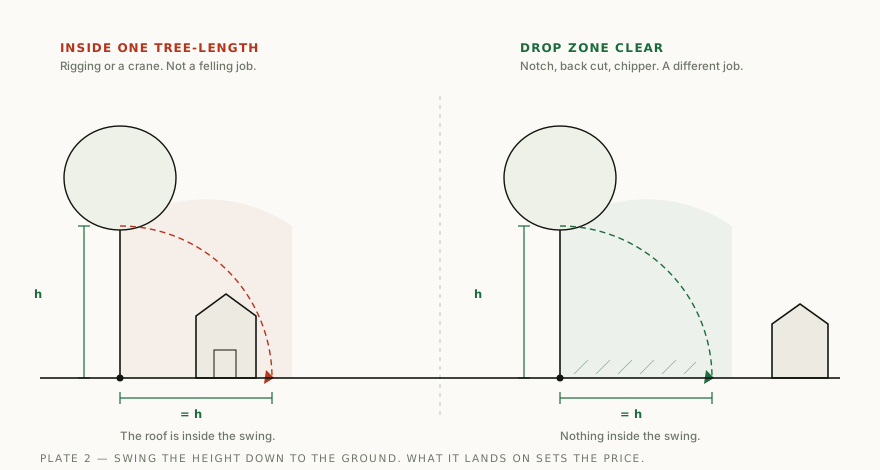
| Proximity | Inside one tree-length of a structure or a line and you're rigging or setting a crane. This is the single biggest jump on most residential jobs. |
| Access | A narrow gate can turn a two-hour chip into a day of dragging brush around a house. |
| Haul-away | Where the wood ends up. Some customers want the rounds left, most don't, and it's worth asking before you quote. |
| Stump | Usually priced per inch of diameter. Often forgotten in the quote and then argued about afterward. |
| Species and condition | A brittle silver maple with included bark is not an oak. Decay changes the plan and sometimes changes whether you climb it at all. |
There are products selling instant firm prices off a picture. We think that's how you lose this trade's trust, and once it's gone you don't get it back.
A photo doesn't show internal decay. It doesn't show what the ground will do under an outrigger after three days of rain. It doesn't show that the only drop zone is a septic field, or that the neighbor's fence is six inches inside the property line.
So TreePro gives a range and says what it assumed. When the assumptions are shaky it says so and tells you to go look. The final number is yours, with your name on it, the way it already is.
The diagnosis and the seasonal work are the parts a general-purpose tool can't copy.