Seven variables, in the order they actually matter. None of this is secret. It is what an experienced climber does in his head standing in the yard, written down so it can be checked and taught.
Most bad tree prices are not arithmetic errors. They are a missing fact, and it is usually the same fact: how close the tree is to something that must not be hit.
A sixty-foot oak in an open field and a sixty-foot oak six feet off a garage are the same tree and two different jobs. One is a notch, a back cut and a chipper. The other is a crane or a day of rigging every piece down over a roof. Quote them the same and you either lose the first one or lose money on the second.
| Variable | What it actually changes |
|---|---|
| 1. Height | Time in the air, number of sections, rope and rigging, and how big a drop zone you would need if you had one. |
| 2. Proximity | Inside one tree-length of a structure or a line, you are rigging or setting a crane. This is the biggest single jump on most residential work. |
| 3. Access | Gate width, slope, and what the lawn will do under an outrigger. A narrow gate can turn a two-hour chip into a day of dragging brush around a house. |
| 4. DBH at 4.5 ft | Section weight and chipping time. Measure at breast height, not at the flare, because the flare lies. |
| 5. Haul-away | Where the wood ends up. Ask before quoting. Some customers want the rounds; most do not, and the volume is real money. |
| 6. Stump | Usually per inch of diameter. Most often forgotten in the quote, and then argued about afterward. |
| 7. Species and condition | A brittle silver maple with included bark is not an oak. Decay changes the plan, and sometimes changes whether you climb it at all. |
Take the height of the tree and lay it flat in every direction from the base. Anything inside that circle is a thing you have to control the descent of.
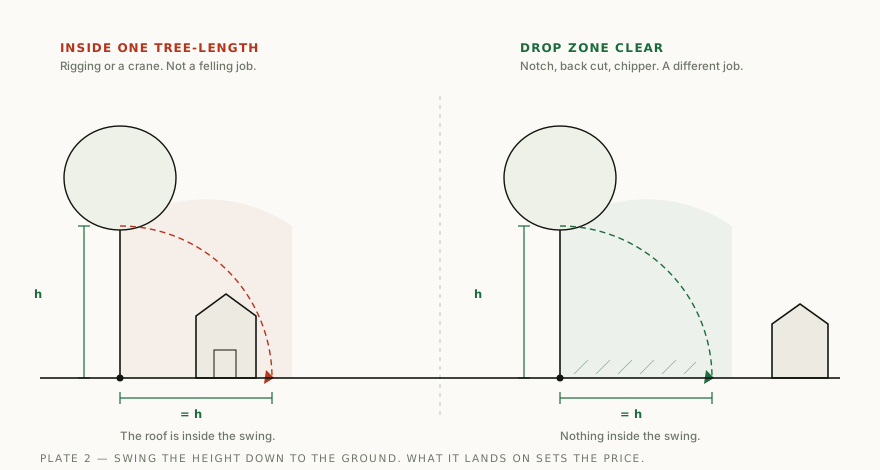
That single test sorts most residential removals into two buckets before you have thought about anything else. It is also the question to ask on the phone, because it decides whether the site visit is worth the drive.
Inside one tree-length of an occupied structure, so nothing free-falls. Access is good, which matters more than it sounds: it means the crane is cheaper than the labour, because a crane day beats three rigging days.
Drivers: crane, sectioning from the top, roping limbs over a roof, full haul, stump. Four-man crew, one day.
No structure, no line, no rigging. Notch, back cut, limb it on the ground. The skill is in the felling, and the whole job is a fraction of the first.
Drivers: felling, chipping, hauling brush only. Two-man crew, half a day.
Because a number here would be wrong for you. Crane rental, tipping fees, labour and insurance vary enormously by market, and a figure published as guidance in one market ends up quoted back at somebody in another. The variables transfer. The numbers do not.
"We'll clean up after ourselves" means something different to you and to the customer. Say what leaves: brush, rounds, chips, stump grindings. The argument always happens at the end, when you have no leverage left.
It is a separate machine and a separate trip if you are not set up for it. Price it in or exclude it in writing.
The photo shows the canopy. The problems are at the bottom: a cavity, a buried flare, a girdling root, soil heaved on the tension side. If the base is not visible, the price is provisional and should be labelled that way.
An hour of driving to look at a tree that was never going to convert is a real cost that appears nowhere in the quote. Qualify on the phone, with the three questions that sort it: how tall, how close, can a truck get in.
There are products selling instant firm prices from a picture. A photograph does not show internal decay, what the ground does under an outrigger after three days of rain, or that the only drop zone is a septic field.
What software can honestly do is produce a range with its assumptions written out, and flag the jobs that need eyes on them. That is what TreePro does. The final number stays yours, with your name on it.